
Method
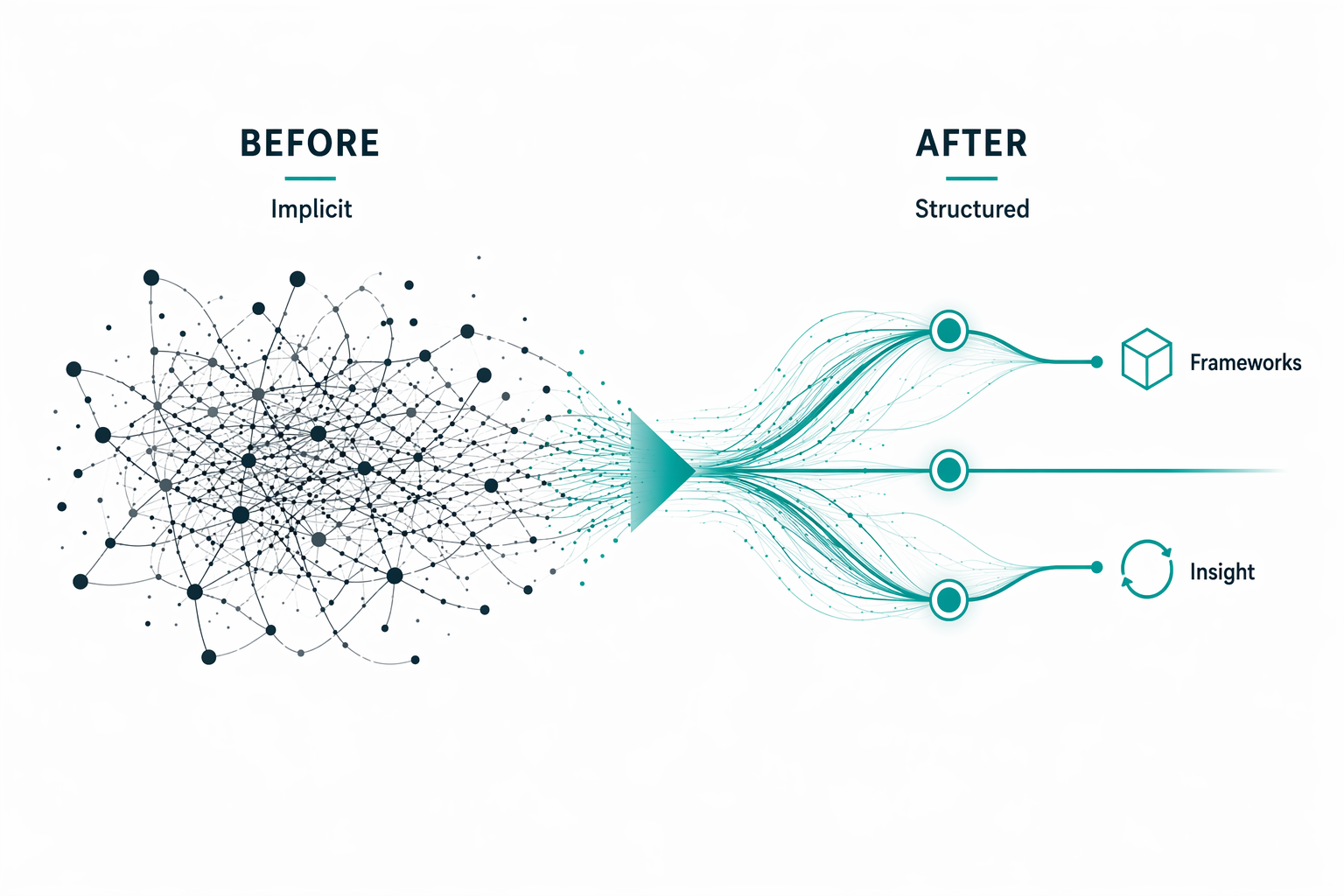
Tacitura operates through three layers:
Elicitation — capturing tacit decision patterns
Structuring — formalising knowledge into reusable forms
Application — embedding into workflows and systems
The intent is to make expert judgement progressively more structured, repeatable, and scalable—without reducing its richness.
Structured Interviews
Expert practitioners articulate decision-making and tacit knowledge through guided interviews
2. Signals and Patterns Identified
Patterns and heuristics are identified from interviews
3. Artefact Generation
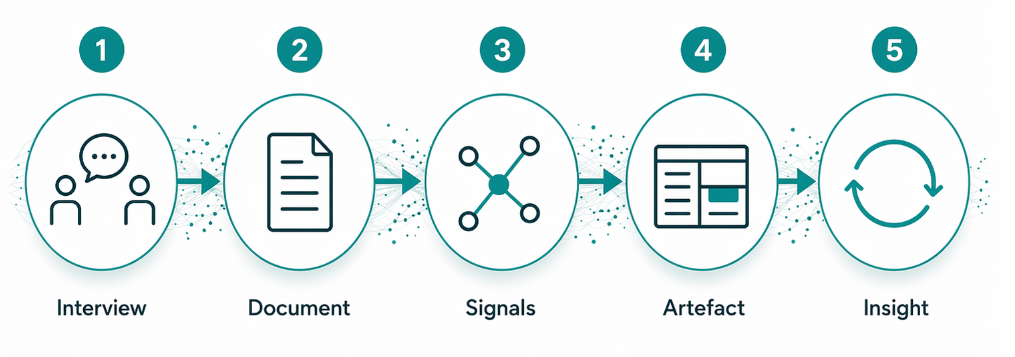
Patterns and knowledge are captured in format required in line with end-user objectives
The approach is intended to progressively build structured representations of expert judgement that can be reused, adapted, and extended over time.
The major differentiation between this method and conventional knowledge management approaches, which rely on documentation, is focusing on the structured capture of judgement itself.